Friday, November 2, 2012

Cruel Possession


Hazem loves music.


Along with several other children in the deafblind unit, Hazem can hear a very little bit. One of his favorite things to do is sit on a comfy sofa, hold a music-playing toy to his ear, and gently rock back and forth, mesmerized. He could do this for hours.

In fact, he used to. 

For hours. 

For days. 

For years.

Like most people, Hazem’s family had no idea how to raise a deafblind child. But they had a very good idea of the stigma that their culture places on people with disabilities and the consequent shame that it places on their relatives. No doubt Hazem’s family was relieved to discover that they could keep their son occupied and out of the way with a little hand-held electronic device. 

Though he probably didn’t sit on a comfy sofa in his house. 

But as I was saying, Hazem loves music. More than that: because music so cruelly possessed his early childhood, he is dependent on it. Or at least he was when he first came to the Holy Land Institute. Even now, though, if the teachers here allowed Hazem to listen to music all day, he would do so and wouldn’t learn or experience anything else. 

As you can imagine, then, the teachers have worked hard to wean Hazem off of music. He can only listen at certain times, and for a certain period of time. 

My fifth or sixth day in the deafblind unit. Three o’clock in the afternoon. Hazem, his primary teacher, and I are sitting on a porch swing, gently rocking back and forth. I am sitting on Hazem’s right side, the teacher is sitting on his left, and the three of us are squished closely together. 

Hazem’s right hand begins to rub my jeans on my left thigh. He is slowly running his fingers over my cell phone. And suddenly, something clicks in his mind.  

He tries to force his hand into my pocket, and I know that he isn’t allowed to do this, so I try to push his hand away, which causes him to scream, and somehow this 13-year-old boy is using more force than I am, and his fingers are going deeper into my pocket, so I stand up, forcing his fingers out, but I cannot step away and I am bent over because Hazem now has a death-grip on me, with one hand clutching my shirt near my left shoulder and the other hand clinging to my right arm, and he is crying and screaming, and somehow someway his teacher and I manage to release his grip and distance ourselves, leaving Hazem crying and screaming at the top of his lungs on the swing. 

We must give him at least five minutes to calm down. 

And he does. It used to take him a lot longer. 

Saturday, October 27, 2012

When Hands Hurt

One of the first things that I noticed about the children here is how darn cute they are. As I walked around the playground on that first afternoon, their quirky child-like behaviors, life-giving laughter, and inexhaustible exuberance won me over in a heartbeat.   


But it didn’t take me long to make a second, more sobering observation:

The children here are violent. 

Especially the younger ones. If a conflict occurs and so-called “negative” emotions arise, most of the younger kids are quick to resort to physical fighting. For some, it is in fact their first resort. This is not “a boy thing,” by the way: girls hit girls, girls hit boys, boys hit girls. They are always separated and scolded, of course. But it always happens again. 

Now, perhaps what I’m seeing here isn’t all that different from what I would see at schools back in the States. Having been home-schooled, I’ve never watched young children play at recess and don’t have much with which to compare what I’m seeing here. Even so, I think that my observation is legitimate: these children are uncommonly violent. 

If so, then what’s going on? I have a hunch. 

Many of the students at Holy Land Institute have little or no knowledge of Jordanian Sign Language when they first arrive at the school. They learn language here. Hopefully, families have previously devised some of their own signs, but these elementary linguistic innovations are unlikely to keep pace with the child’s natural development and meet her or his communicative needs. 

So, when many of these children begin at the school, they are not able to effectively communicate everything that they want to, everything that they must. Some can only communicate a very small percentage of these things.

When hearing children fight, what do we do? We stop them, we reprimand them for fighting, and then we suggest (require) an alternative: talking. We teach kids to describe how they’re feeling, to come up with possible solutions to the conflict, to agree on a solution, and to apologize. 

So, what happens if children haven’t learned (more specifically, haven’t been given the means to learn) how to describe, devise, agree, apologize... how to communicate with language?

They keep fighting. What other options do they have?

One possible definition of violence is the physical expression of negative emotions. 

The goal, then, is to provide and encourage other avenues of expression. 

...Writing a blog, perhaps? 

Monday, October 22, 2012

Stretching


When I was in high school, I worked as a lifeguard. Which means that I worked as a baby-sitter at a pool. And like all baby-sitters, I saw my fair share of bumps and bruises. ...And gashes. 

I vividly remember one injury in particular. A little boy, maybe six years old, slipped, fell, and cut his bottom lip. I was on break at the time, cooling myself in the office. A fellow baby-sitter rushed the crying child inside and began to work. 

She was holding an ice packet to the boy’s lip, and he was whimpering, over and over again, “Owie! Owie!” It was quite cute, actually. While I stood there watching, thinking that there was nothing for me to do, the cashier Chris walked over to the boy, knelt by his side, and grabbed his hand.

“It’s okay bud, I know it hurts, but here, squeeze my hand. There you go, squeeze it hard, harder! That’s right, all of that pain you’re feeling, you just give it to me!”

Chris knelt like this for about a minute. I watched. 

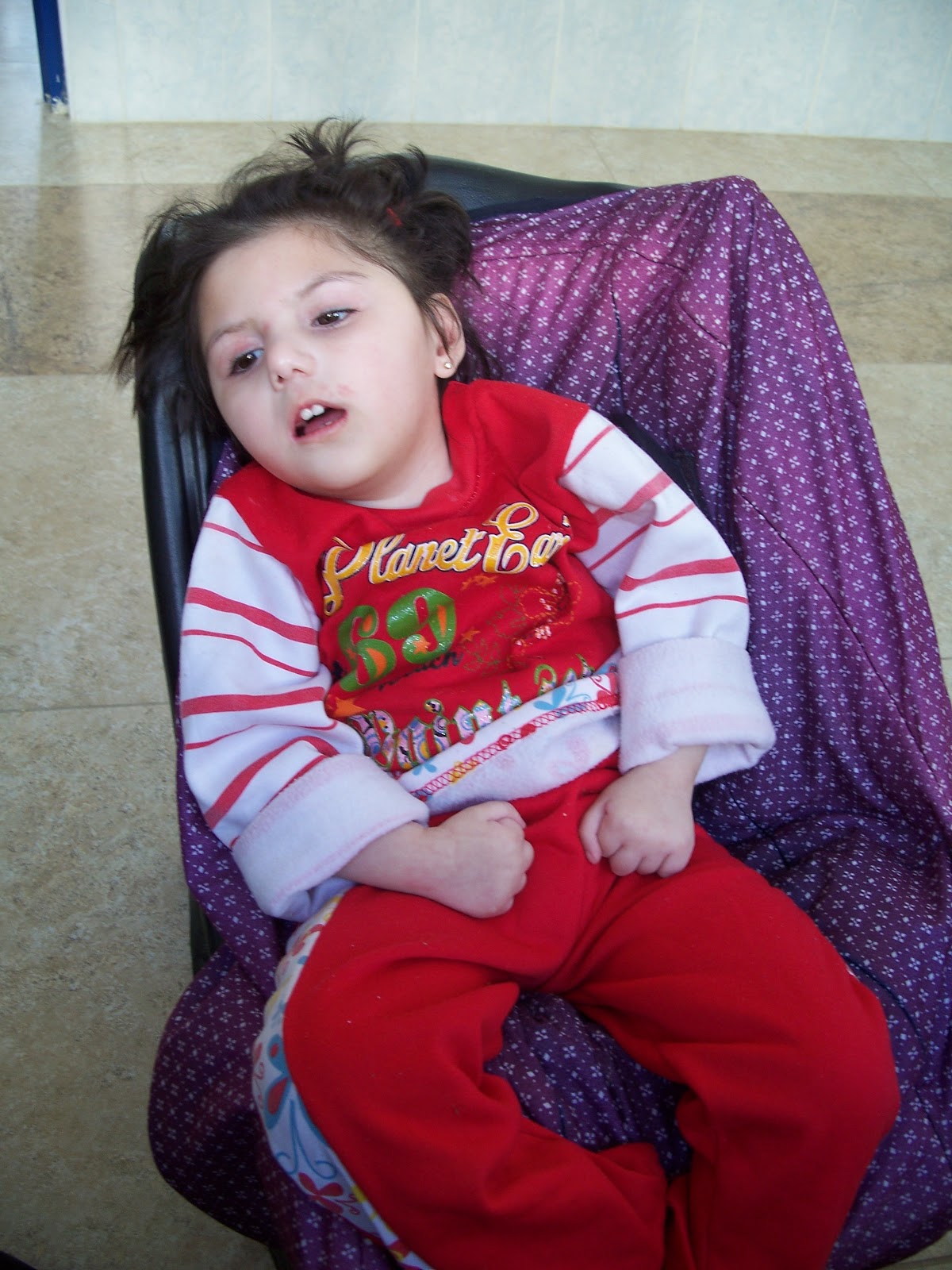
A few days ago, I was sitting next to and touching Rumais while she was sitting in her car-seat (each of the younger children has one of their own). 

Her baby fingers are almost always clenched into fists, and my finger was gently breaking in. Slowly making my way through a collapsed tunnel.

One of the teachers walked up, sat down on the other side of Rumais, and began a session of physical therapy. 

As always, Rumais began to cry. I felt her fingers tighten, and I immediately thought of that little boy at the pool.  

And then, I thought of Jesus.  

He is constantly stretching our bodies and souls towards sanctification, and sometimes we don’t know what’s going on, and sometimes it’s painful. Very painful. 

But it’s okay. Because at the very same time, he is holding our hand. 

“Come to me, all who are heavy laden, and I will give you rest.”

“All of that pain you’re feeling, you just give it to me.”

Wednesday, October 17, 2012

Initial Musing on Deafblind Ministry


"...So, what will you do?"

The question that I was most frequently asked after telling people that I was going to work with the deafblind in Jordan. Most of the time, I smiled, shrugged, and just said, “Touch.”

I want to share a brief reflection on my one-word answer.

In deafblind ministry, there is bad touch and there is good touch. Contrary to what many would assume, the difference is not that bad touch causes pain and good touch gives pleasure. Rather, the difference is that bad touch aims to control, while good touch strives to empower. 

If Morhaf needs to go to another room, I do not grab him by the wrist and walk, forcing him to follow me; instead, I slide my hand (palm up) underneath his, gently take hold of it as he takes hold of mine, and then we walk together. 

If six-year-old Mohammed throws his upper body on the table during snack-time and should be told to sit up in his chair, I do not push his chest or pull his shoulder; instead, I tap him. Persistently, annoyingly...and eventually, I will probably resort to gentle pushing or pulling. 

Sometimes, you control in the moment for the sake of empowering in the future. 

And sometimes (though these situations are much less common), you cause pain in the moment for the sake of giving pleasure in the future. 


Rumais is a deafblind baby girl whose arms and legs are severely underdeveloped. Like several other students, she must receive physical therapy numerous times each day. Bend one of her knees an inch, and her other leg starts to shake, and she cries and groans. 

I am glad that it is less common, because it is much more heart-breaking. 


Wednesday, October 10, 2012

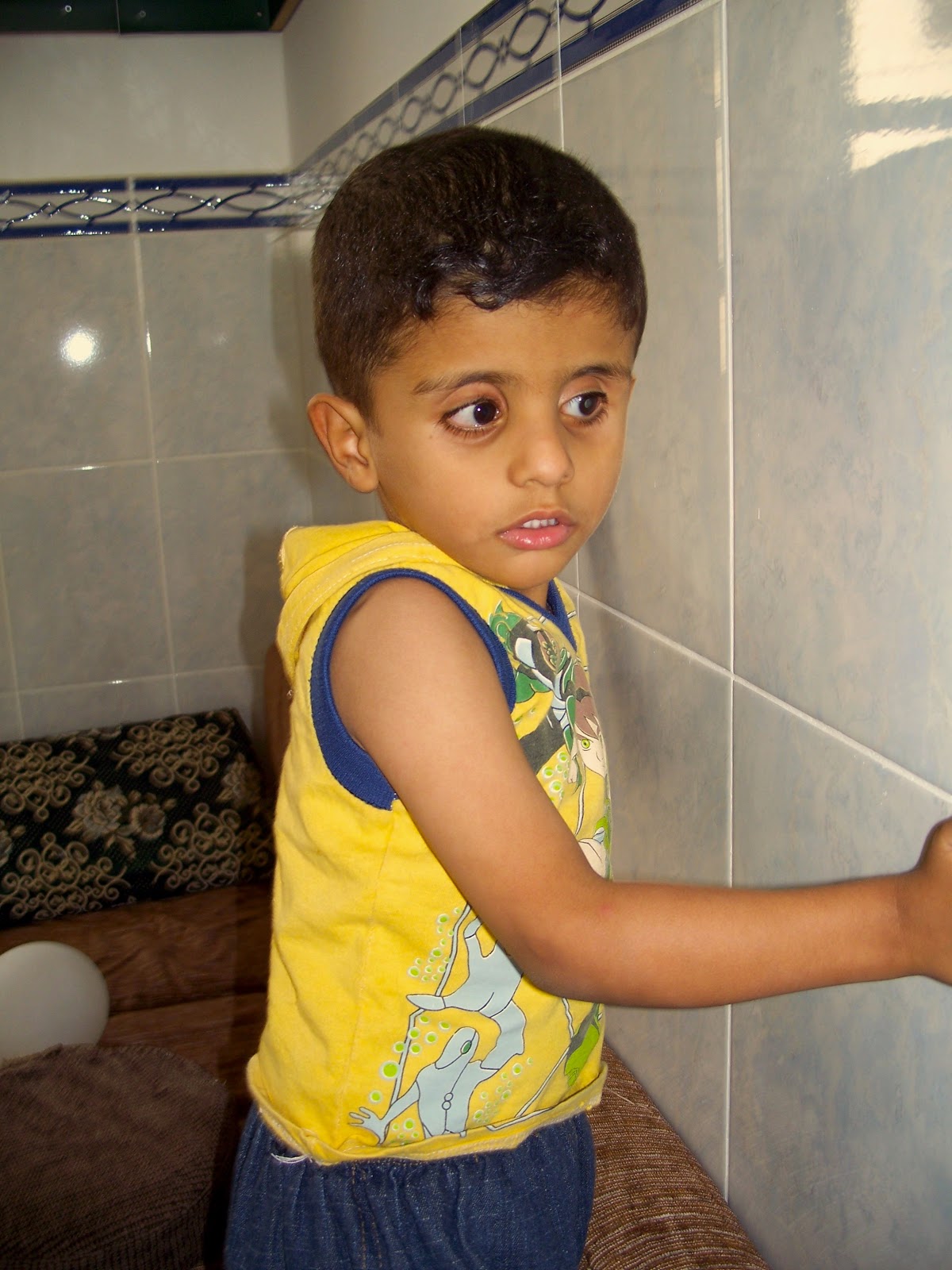
See the Boy


His name is Morhaf. 


A  few others... 


This is Mohammed. My SALT predecessor, Brent Stutzman, worked with him for three years. Now, Mohammed possesses language skills that are nothing short of extraordinary. 


This is Issa. His spirit is utterly tranquil. The other day, he prepared (with the help of his teacher) a delicious pudding snack for his fellow deaf-blind students.


This is Hazem. He and his teacher have walked to the cafeteria and are picking up a fruit snack for the deaf-blind students. 


Starting next week, I will be working almost exclusively with Hazem whenever I am serving in the deaf-blind unit. 


Lord willing, Morhaf will follow in the footsteps of these three boys. 


Saturday, October 6, 2012

Where No Hand Moves?


See the boy
slam his forehead on the tile floor,
again and
again.
He is three years old.
Hear the boy 
scream
from the belly of his throat,
as if tortured
by someone else. 


It takes two seconds
for God’s hand to move
in between floor and flesh.
This hand has freckles
and looks smaller than mine. 

Oh my God,
what of those places where 
the unseeing and unhearing
are unseen and unheard?
Where no hand moves?


See the boy 
slam his forehead on the tile floor, again and again. He is three years old.
Hear the boy 
scream from the belly of his throat, as if tortured by someone else.


His soul must protest
his body’s condition. 
More than disability,
all the shit that comes with it.
Like Saint Peter, he was carried where he didn’t want to go.

But his body can’t
obey his soul.
He knows no means,
except despairing self-harm. 
So he slams and he screams.


See the boy slam his forehead on the tile floor, again and again, he is three years old,
Hear the boy scream from the belly of his throat, as if tortured by someone else


The man after your own heart
said
that you are abounding in steadfast love to all
who call upon you.
Does this count?


Seetheboyslamhisforeheadonthetileflooragainandagainheisthreeyearsoldheartheboyscreamfromthebellyofhisthroatasiftorturedbysomeoneelse


Now see him smile.
Big.
Hear him laugh.
Loud.

Mystery.
All of this is a mystery.  
God alone comprehends.